Ebook Free Strategic Cost Management: The New Tool for Competitive AdvantageBy Shank Govindarajan
In other site, you might feel so difficult to discover the book, yet below, it's very easy then. Many resources in numerous types and themes are likewise provided. Yeah, we provide the charitable publications from collections around this world. So, you could appreciate reading other nation book and as this Strategic Cost Management: The New Tool For Competitive AdvantageBy Shank Govindarajan to be your own. It will not require difficult ways. See the link that we give as well as pick this book. You can find your true fantastic experience by only reviewing book.
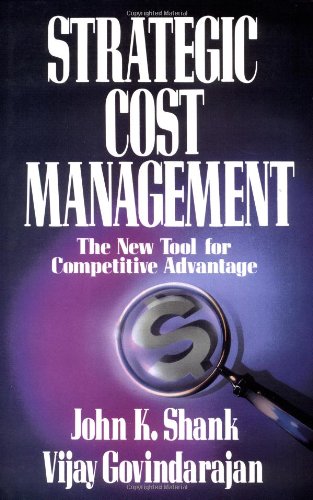
Strategic Cost Management: The New Tool for Competitive AdvantageBy Shank Govindarajan

Ebook Free Strategic Cost Management: The New Tool for Competitive AdvantageBy Shank Govindarajan
What type of enjoyment book that you will consider accompanying your holiday time in your vacation? Is that the fiction publication or unique or literary publication or the accurate book? Everybody has various taste to establish as the fun or enjoyment book for reading some might think that the one that can entertain is the book that uses the enjoyable point and its fiction. But, some also discover that they will enjoy the factual publication as enjoyment to meet the spare time.
Any type of publications that you check out, regardless of exactly how you obtained the sentences that have actually been read from guides, definitely they will offer you goodness. Yet, we will show you among suggestion of the book that you have to read. This Strategic Cost Management: The New Tool For Competitive AdvantageBy Shank Govindarajan is what we undoubtedly mean. We will certainly reveal you the reasonable reasons you should read this book. This book is a type of valuable publication composed by a skilled author.
So why do you have to read this book? The solution is very straightforward. This publication is very appropriate to what you have to get currently. This book will assist you to resolve the issue that occurs today. By reading this book, you could make certain to on your own what to do even more. As known, analysis is also well known as an extremely important activity to do, by everybody. Never ever worried to take brand-new task in your life!
Based upon this problem, in order to help you we will certainly reveal you some means. You can handle to check out guide minimally prior to falling asleep or in your extra time. When you have the moment in the short time or in the holiday, it could help you to finish your holidays. This is just what the Strategic Cost Management: The New Tool For Competitive AdvantageBy Shank Govindarajan will minimally offer to you.
In this book, Shank and Govindarajan demonstrate how strategic cost management - an analytical framework which relates meaningful accounting information to a firm's business strategy - is changing accounting practices in leading companies. Using case studies, including Ciba-Geigy, Ford, Motorola and Texas Instruments, they show how the tools of strategic cost management - value chain analysis, strategic positioning analysis and cost driver analysis - provide a sustainable competitive advantage over companies whose cost systems are in disarray.
- Amazon Sales Rank: #1622370 in Books
- Published on: 1993-08-01
- Original language: English
- Number of items: 1
- Dimensions: .97" h x 6.40" w x 9.54" l,
- Binding: Hardcover
- 271 pages
Review H. Thomas Johnson Retzlaff Professor of Quality Management, Portland State University, author, Relevance Regained Here is a balanced and penetrating review of the information companies need to support continuous learning—perhaps the only sustainable source of competitive advantage. I recommend Strategic Cost Management to all executives, regardless of background or experience. -- Review
About the Author John Shank is Noble Professor of Management Accounting at the Amos Tuck School of Business Administration at Dartmouth College. He has published twelve books, and is an active consultant.
Excerpt. © Reprinted by permission. All rights reserved.
Chapter 1
AN INTRODUCTION TO STRATEGIC COST MANAGEMENT
New Wine, or Just New Bottles ?
This book represents a new emphasis in managerial accounting. It is based on the premise that managerial accounting must explicitly consider strategic issues and concerns. We believe that the incorporation of strategic concerns into cost analysis represents a very natural, overdue extension of managerial accounting, which itself only became popular about thirty years ago.
NEW WINE?
In 1963 Sidney Davidson wrote a paper for the Accounting Review marking the fortieth anniversary of the publication of J. M. Clark's book, Studies in the Economics of Overhead Costs. Davidson titled his retrospective of Clark's book "Old Wine into New Bottles." Davidson's paper acknowledge Clark's contributions to the development of relevant cost analysis -- one of the "new bottles" of managerial accounting in 1963. Though times change, this metaphor remains apt. Are the new ideas fomenting today in management accounting really new wine, or merely old wine recycled in new bottles? It is our belief that we really have new wine.
To coin a new mixed metaphor, although the winds of change are clearly blowing for management accounting, some observers believe that too many management accountants are asleep at the switch. What is the evidence that the fundamental concepts of management accounting are changing or that they need to change? What is the evidence that too many management accountants are lagging behind this change rather than leading it? What is the evidence to support the assertion that the management accounting practiced for the past thirty years (since Anthony, 1956; Shillinglaw, 1961; and Horngren, 1962 popularized the term) is becoming obsolescent? These are the questions this book addresses.
It is not our intent to belittle the accomplishments of the management accounting field over the past thirty years or to belittle the leadership efforts of those who have shaped and refined the current underlying conceptual framework. Management accounting could not go forward were it not for the achievements that have brought it this far. But, it must go forward. New times often call for new thinking.
Looking back over the past thirty years, the transition from cost accounting to managerial cost analysis is one primary accomplishment. This transition has led to the prominence management accounting enjoys today in industry, commerce, and academe. The transition from managerial cost analysis to what is called here strategic cost management (defined below) is one primary challenge looking forward. Success in that next transition will help determine the prominence of cost management in the future.
Interest in strategic cost management derives from the rise to prominence of strategy over the past twenty years. Several influential books have contributed to the current widespread prominence of strategy. In addition, since the early 1970s, the major academic journals regularly have begun to publish articles about strategy) Also during this period two journals have been started that are devoted to strategic analysis, Strategic Management Journal and Journal of Business Strategy. The major management journals (Harvard Business Review, Sloan Management Review, Business Horizons, and California Management Review) now also regularly publish articles about strategy.
Finally, a billion-dollar-a-year industry in strategic analysis has arisen. Even the CPA firms are now heavily involved in this consulting segment. Clearly, strategic analysis is an important element of what is taught in business schools, what is written about in academic and management journals, and what companies are concerned about.
However, to date there has been little attention to this topic in the major research journals in accounting. Except for two papers in the Accounting Review (Kaplan, 1984b; Patell, 1987) there are no references to strategic analysis in the Accounting Review, Journal of Accounting Research, or Journal of Accounting and Economics. One journal, Accounting Organization and Society, has published articles on strategy and control but not on strategic cost issues. Two new journals are emerging to fill this void: The Journal of Cost Management and the Journal of Management Accounting Research.
The dearth of attention to strategic analysis in the traditional research journals in accounting carries through to the managerial accounting textbooks as well. Only a few of the topics of strategic cost management receive some attention in only a few of the best-selling management accounting texts. Further evidence of the lack of concern among management accountants with strategic topics is found in a 1988 survey by Robinson and Barrett of management accounting curricula. Their study measured the extent to which the topics prescribed by the American Assembly of Collegiate Schools of Business for managerial accounting were being covered in accredited and nonaccredited programs. Strategic topics were not mentioned anywhere in the report. The reader must look outside the major accounting journals and the accounting curricula in most AACSB schools to find the literature about strategic cost management.
In summary, two observations emerge. First, there is an extensive and rapidly growing literature on the concept of strategic cost management. Second, the ideas reflected in the concept have to date received scant attention in the leading accounting research journals, the leading textbooks, or graduate and undergraduate curricula. Which of these two observations is more reflective of the attention the concept deserves involves a value judgment that the reader is encouraged to consider very carefully. Tektronix is an example of one firm in which the new concepts have essentially replaced traditional managerial accounting, as described by Turney and Anderson (1989). Johnson & Johnson is an example of a huge, world-famous company that is in the process of totally revamping the focus of its managerial accounting efforts.
To help frame the reader's consideration of the concept, this chapter presents a definition of strategic cost management. Chapter 2 summarizes the development of the field in terms of the three principal themes deemed to underlie it. Chapters 3 through 14 explain our perspective on each of these three themes in more depth. They represent a summary of the state of the art as of 1993.
STRATEGIC COST MANAGEMENT -- DEFINITION AND OVERVIEW
Cost analysis traditionally is viewed as the process of assessing the financial impact of alternative managerial decisions. How is strategic cost management different? It is cost analysis in a broader context, where the strategic elements become more conscious, explicit, and formal. Here, cost data is used to develop superior strategies en route to gaining sustainable competitive advantage. No doubt cost accounting systems can help in other areas as well (inventory valuation, short-term operating decision, etc.). However, the use of cost data in strategic planning has not received the attention it deserved, either in cost accounting textbooks or in management practice. The billion-dollar-a-year market in strategic cost management consulting services is dominated by such firms as Bain & Company, Boston Consulting Group, Booz, Allen & Hamilton, McKinsey & Company, and Monitor, Inc. Yet, the Amos Tuck School of Business Administration at Dartmouth College is one of only a few business schools in the country that teach a course built around the specific techniques used by these firms in this business niche. A sophisticated understanding of a firm's cost structure can go a long way in the search for sustainable competitive advantage. This is what we refer to as "strategic cost management."
Consistent with this perspective, the central theme of the book is that accounting exists within a business primarily to facilitate the development and implementation of business strategy. Under this view, business management is a continuously cycling process of: (1) formulating strategies, (2) communicating those strategies throughout the organization, (3) developing and carrying out tactics to implement the strategies, and (4) developing and implementing controls to monitor the success of the implementation steps and hence the success in meeting the strategic objectives. Accounting information plays a role at each of the four stages of this cycle.
At stage one, accounting information is the basis for financial analysis, which is one aspect of the process of evaluating strategic alternatives. Strategies that are not financially feasible or that do not yield adequate financial returns cannot be appropriate strategies.
At stage two, accounting reports constitute one of the important ways that strategy gets communicated throughout an organization. The things we report are the things people pay attention to. Good accounting reports are thus reports that focus attention on those factors that are critical to the success of the strategy adopted.
At stage three, specific tactics must be developed in support of the overall strategy and then carried through to completion. Financial analysis, based on accounting information, is one of the key elements in deciding which tactical programs are most likely to be effective in helping a firm to meet its strategic objectives.
And finally, at stage four, monitoring the performance of managers or of business units usually hinges partly on accounting information. The role of standard costs, expense budgets, and annual profit plans in providing one basis for performance evaluation is well accepted in businesses around the world. These tools must be explicitly adapted to the strategic context of the firm if they are to be maximally useful.
Three important generalizations emerge from this way of viewing management accounting:
1. Accounting is not an end in itself, but only a means to help achieve business success. There is thus no such thing as good accounting practice or bad accounting practice as such. Accounting techniques or systems must be judged in light of their impact on business success. 2. Specific accounting techniques or systems must be considered in terms of the role they are intended to play. A concept such as return on investment analysis may have little relevance for assessing the performance of middle-level managers in situations where investment decisions are made centrally. However, this concept may at the same time be critically important in assessing the attractiveness of different strategic investment options. Accounting analysis that is not useful for some purposes may be extremely useful for others. A working knowledge of management accounting thus involves knowledge of the multiplicity of roles accounting information can play. 3. In evaluating the overall accounting system for a business, mutual consistency among the various elements is critical. The key question is whether the overall fit with strategy is appropriate. For example, a target cost system with tight, engineered cost allowances may be an excellent tool for assessing manufacturing performance in a business following a strategy of being the low-cost producer. However, developing such an accounting tool might be dysfunctional in a business pursuing a strategy of differentiation via product innovations.
Summarizing these three generalizations, the key managment questions to ask about any accounting idea are:
1. Does it serve an identifiable business objective? (For example, facilitate strategy formulation, assess managerial performance, etc.) 2. For the objective it is designed to serve, does the accounting idea enhance the chances of attaining the objective? 3. Does the objective whose attainment is facilitated by the accounting idea fit strategically with the overall thrust of the business?
For an accounting idea to be useful for a particular purpose in a particular business at a particular time, all three of these questions must yield an affirmative answer. This book is about accounting as a tool for strategic management. The ideas presented here yield affirmative answers to these three questions, with explicit attention to the strategic issues involved. In short, strategic cost management (SCM) is the managerial use of cost information explicitly directed at one or more of the four stages of strategic management.
ROAD MAP FOR THE READER
This book is organized around three key themes for managing costs effectively. The emergence of strategic cost management (SCM) results from a blending of the following three themes, each taken from the strategic management literature:
1. Value chain analysis 2. Strategic positioning analysis 3. Cost driver analysis
Cost management issues underlying each of these three themes are developed and illustrated in this book.
Synopsis of Chapters
In chapter 2, we present the overall framework for this book, which is that the emerging concept of SCM is a blending of the financial analysis elements of three themes from the strategic management literature -- value chain analysis, strategic positioning analysis, and cost driver analysis.
In chapter 3, we present a short case (dealing with a private label opportunity for a bicycle manufacturer) that supports a strategic analysis as well as a relevant cost analysis. The chapter demonstrates that strategic cost analysis is often just a different application of the same sorts of financial tools we normally use today. But, even when the analysis is different only in its focus and not in its underlying structure (such as a value chain analysis), the insights can differ dramatically. What we emphasize is a need for managers to be aware that cost analysis must explicitly consider strategic issues and concerns.
Chapters 4 and 5 deal with value chain analysis -- the first key to effective cost management. In chapter 4, we define the value chain concept, contrast it with the value-added notion, and highlight the strategic power of value chain analysis. We then discuss the methodology for constructing and using a value chain. Finally, we discuss two real world examples to illustrate the power of the value chain perspective. The first example contrasts the value chains of AT&T, NYNEX, and IBM in the telecommunications industry. The second example is drawn from the airline industry; here, we not only discuss the value chain of a major trunk airline but we also contrast the value chains of United Airlines and People Express (in its heyday).
While the two examples discussed in chapter 4 are based on published financial statements, chapter 5 presents an example of value chain analysis based on our field research in the packaging industry. Here, we show the methodology for constructing a value chain for a firm and highlight the insights that can be derived from such an analysis.
Chapter 6 through 9 turn to differentiated controls for differentiated strategies -- the second key to effective cost management. In chapter 6, we define the concept of strategy and describe generic strategies that business units can adopt. We then discuss how to vary the form and structure of control systems in accordance with variation in generic business-level strategic contexts. We summarize the research findings in this area in terms of how to link the different elements of control systems with business-level strategies. Finally, we contrast our strategic perspective on controls with conventional management practices.
The focus of the discussion in chapter 6 is conceptual. We present practical examples of how to tailor controls to strategies in the next three chapters. Chapter 7 presents a short disguised case to emphasize how variance analysis -- an important tool of performance evaluation and control -- becomes most meaningful when it is tied explicitly to the strategic context of the business under evaluation.
Chapter 8 presents a live (but disguised) case to illustrate two key ideas in strategically based cost analysis and control: (1) The use of cost analysis to identify the differing strategic positions of three products of a large chemicals manufacturer, and (2) the use of differentiated management controls focusing on the differing key success factors for the differentiated strategies for the three products.
Chapter 9 examines the use of nonfinancial measures based on a field study of five high-tech manufacturers (mostly makers of semiconductors). Hence, we synthesize the results from these field studies and describe the rise of nonfinancial performance measures as a tool of strategic control. We also review why these firms felt that their prior accounting systems did not capture all measures that were important for Success.
In chapters 10 through 14, we discuss cost driver analysis -- the third key for effective cost management. Chapter 10 provides a framework for understanding how structural factors (such as scale, scope, and experience) and executional factors (such as quality, design, and continuous improvement) drive product costs.
In chapters 11 and 12, we discuss activity-based costing (ABC), which is a framework to operationalize complexity, one fundamental structural cost driver. Chapter 10 uses a simplified case to demonstrate how traditional and even modern approaches to product costing can be dramatically deceiving about product profitability. The hero is ABC, which we contrast with the villain -- costing based on throughput or output volumes (volume-based costing, for short). We also point out the limitations of ABC. Here, we argue that the benefits of ABC in product line assessment and activity management can best be achieved by avoiding its formalization as part of a general ledger bookkeeping system.
Chapter 12 illustrates the limitations of ABC by presenting and analyzing two case studies. In spite of the very useful insights that emerge from the ABC analysis, we see this situation as an example of the negative role ABC can play in strategic cost management when it is seen as an issue in the design of formal cost accounting systems.
Chapter 13 presents the underlying cost analysis framework for one of the soft executional cost drivers, quality management. Here, we compare and contrast two quality paradigms -- traditional view and total quality management (TQM). We then discuss how conventional management accounting panders to the traditional view on quality and prevents companies from implementing TQM. Finally, we describe ways that a cost analysis framework can support TQM.
In Chapter 14, we describe a framework to understand how technology -- another fundamental structural cost driver -- influences product costs. We illustrate the strategic power of our framework by presenting a field study of a major technological innovation faced by a large forest products company. This chapter concludes the book by illustrating how the SCM theme can provide important new insights on a crucial concern of management today: how to bring strategic concerns directly into the evaluation of technology options. The chapter reviews the theme of the book while showing its relevance for key managerial decisions.
Target Audience
This book is intended for the following users:
Corporate financial officers and controllers as well as management consultants who are concerned about designing managerial accounting systems with a strategic orientation.
Line managers -- marketing, operations, technology, and human resource managers -- who are responsible for making operating decisions based on sound cost analysis.
Accounting educators who have the responsibility for teaching about today's business world in classrooms.
We have successfully used the contents of this book for two types of programs, executive development programs and the MBA program. We have conducted over one hundred executive programs on strategic cost management during the past ten years. These programs have included both controllers -- who design cost management systems -- as well as line managers who use the information generated by such systems. Most of the materials in this book have been developed, tested, and refined based on our interactions with over 3,000 executives, both in the United States and abroad.
In the academic context, we currently teach the required Management Accounting course in the first year of the Amos Tuck School of Business Administration MBA program around the concepts and ideas contained in this book. In addition, we have developed two highly successful second-year electives at Tuck -- Strategic Cost Management and Management Control Systems -- that draw heavily upon the materials from this book. We hope the reader will find the ideas and techniques presented here to be as useful as they have proved to be in our classroom.
Copyright © 1993 by John K. Shank and Vijay Govindarajan
Strategic Cost Management: The New Tool for Competitive AdvantageBy Shank Govindarajan PDF
Strategic Cost Management: The New Tool for Competitive AdvantageBy Shank Govindarajan EPub
Strategic Cost Management: The New Tool for Competitive AdvantageBy Shank Govindarajan Doc
Strategic Cost Management: The New Tool for Competitive AdvantageBy Shank Govindarajan iBooks
Strategic Cost Management: The New Tool for Competitive AdvantageBy Shank Govindarajan rtf
Strategic Cost Management: The New Tool for Competitive AdvantageBy Shank Govindarajan Mobipocket
Strategic Cost Management: The New Tool for Competitive AdvantageBy Shank Govindarajan Kindle
Strategic Cost Management: The New Tool for Competitive AdvantageBy Shank Govindarajan PDF
Strategic Cost Management: The New Tool for Competitive AdvantageBy Shank Govindarajan PDF
Strategic Cost Management: The New Tool for Competitive AdvantageBy Shank Govindarajan PDF
Strategic Cost Management: The New Tool for Competitive AdvantageBy Shank Govindarajan PDF


